
How to organise co-parenting messages and records after separation
After separation, co-parenting arrangements can generate a lot of information.
Plans may change. Pick-up times move. School, holidays, appointments and other arrangements are discussed. Some conversations happen on WhatsApp, others by text or email. Over time, finding one particular exchange can mean scrolling back through months or even years of messages.
Having a simple way to organise those communications can make the record much easier to navigate when you need to return to it.
Why can co-parenting communications become difficult to keep track of?
The problem is often less about one individual message and more about what happens as the communication history grows.
You might have:
- WhatsApp conversations stretching back months or years;
- emails about school, appointments or arrangements;
- changes to dates and times discussed across different conversations;
- documents or other records connected to those discussions; and
- several conversations about the same subject at different points in time.
You may remember that something was discussed without remembering exactly when. Or you may know a particular message exists but have to scroll through hundreds of others to find it.
That is where organising the record can help.
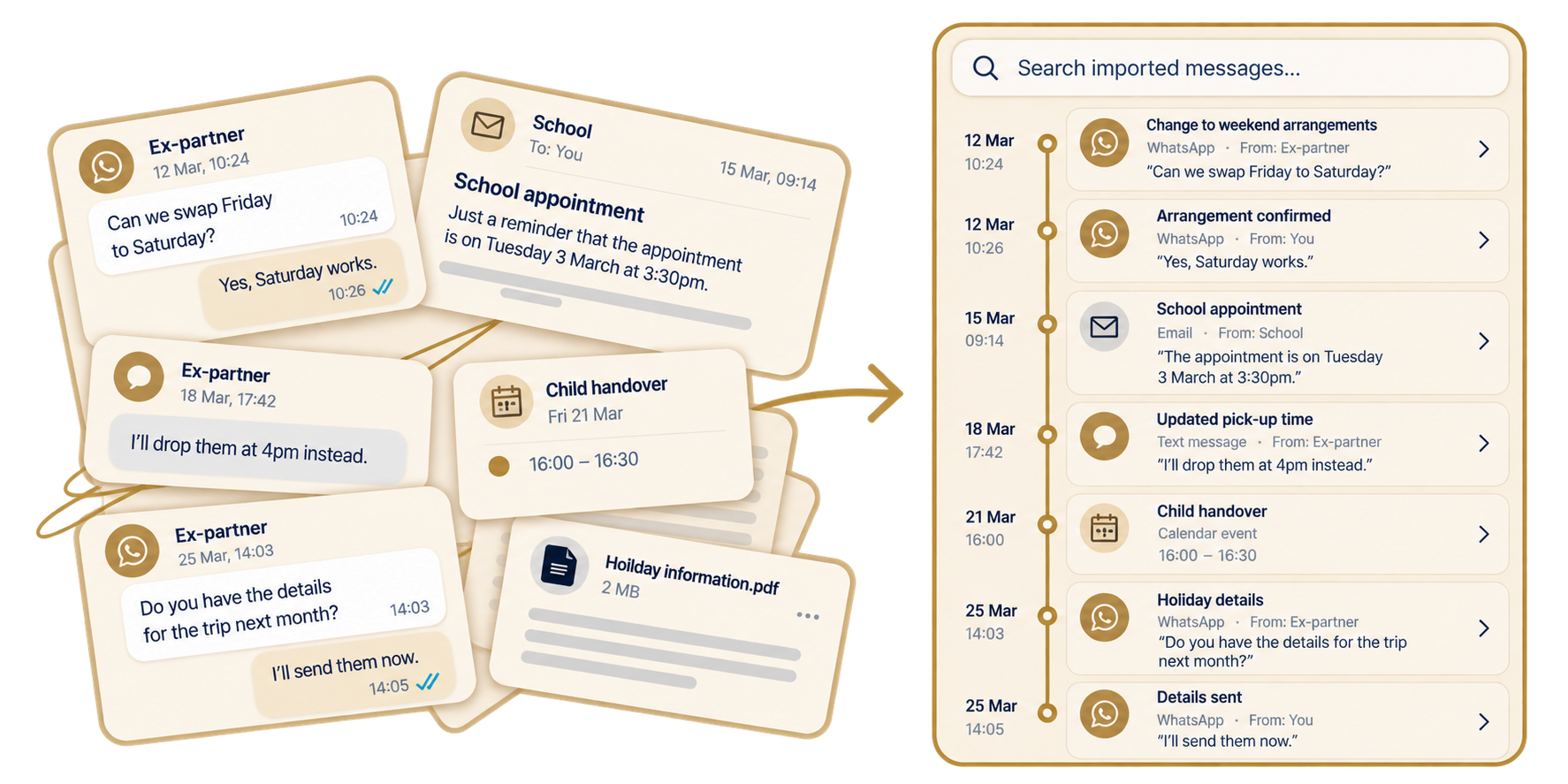
How to organise co-parenting messages and records: step by step
Step 1: Bring the records you already have together
Start by identifying where the relevant communications and records currently sit.
That might include WhatsApp, SMS, email, documents, calendar information or other records you have kept.
At this stage, you don't need to decide which individual conversations matter most. The practical first step is simply understanding what you have and where it is.
Step 2: Keep the original conversations where possible
A screenshot can be useful for quickly capturing something on screen, but it only shows the information included in that image.
Keeping access to the underlying conversation makes it easier to return to the original wording, check when something was said and see what came before or after it.
The same principle applies to other records: where possible, keep the original material rather than replacing it with notes or summaries.
Built for communication histories like this
LegallyHeard is built to help you work through large communication histories while keeping the original record within reach.
You can bring supported messages into your workspace, search imported conversations and follow communications over time, while retaining the ability to return to the original wording and surrounding context.
Step 3: Put communications into chronological order
When arrangements change repeatedly, chronology can make a large communication history easier to follow. Rather than looking at messages as isolated exchanges, dates can help you see the sequence in which conversations happened.
For example, you might have an initial discussion about an arrangement, a later message changing it and another conversation confirming what happened next.
Putting those communications into date order doesn't change what was said. It simply gives you a clearer way to follow the recorded sequence.
Step 4: Make important conversations easier to find again
One of the biggest problems with a long message history is finding something for a second time.
You might locate an exchange today and then struggle to find it again several weeks later.
A useful organisation system should make it possible to return to a conversation without starting another lengthy scroll through your messages.
This is where searchable communications can be particularly useful. LegallyHeard lets you search imported messages so you can locate words, names or exchanges within the communication history and then review them in context.
Step 5: Keep your notes separate from the original record
Your own notes can be useful when you're trying to make sense of a long period of communication. But a note about a conversation is different from the conversation itself.
For example:
Keeping that distinction clear makes it easier to return to what was actually recorded rather than relying only on a later recollection or summary.
Step 6: Keep the record manageable as new messages arrive
Co-parenting communication often doesn't stop because you've organised the existing record. New messages arrive. Arrangements change. New documents or emails may need to be added.
That means the most useful system is one you can continue using rather than something you have to rebuild every time the situation changes.
Set aside time periodically to add new information and keep the record organised. Even a simple routine can prevent another large backlog from building up.
What if your messages already go back years?
Don't assume you need to read every message from beginning to end before you can start getting organised. With a large communication history, the first objective can simply be to create a record you can navigate.
Once your communications are organised, it becomes easier to search for particular exchanges, follow conversations over time and return to the original material when you need it.
This is the type of information problem LegallyHeard is designed to handle: turning a large communication history into a record you can actually work with.
Organising records isn't the same as deciding what is evidence
Organising your communications can help you understand what information you have and make it easier to navigate.
It doesn't determine which messages are legally relevant, what should be disclosed, what should be provided to a solicitor or what should be relied upon in court.
Those questions depend on the circumstances of the matter and, where appropriate, legal advice, applicable rules or court directions.
The practical job here is different: keeping the information organised, traceable and easier to review.
FAQs
Should I keep all of my co-parenting messages?
Keeping the wider communication history available can make it easier to return to the original conversation and check dates, wording and surrounding context. That doesn't mean every message will ultimately need to be provided to a solicitor or used in a legal matter.
What if co-parenting messages are spread across WhatsApp, text and email?
Start by identifying the different places where communications are stored. Bringing records together, or at least keeping a clear system for where they can be found, can make it easier to follow conversations that have taken place across different channels.
Should I organise co-parenting messages by date or subject?
Chronological organisation can be particularly useful for following how communications and arrangements developed over time. Depending on the amount of information you have, you may also find it useful to identify particular subjects while keeping the original dates and source information intact.